
The Patchwork Dog Pattern is a beautiful quilting and appliqué project that transforms small pieces of fabric into a charming dog portrait filled with personality. With floral prints, traditional quilting colors, curved appliqué pieces, decorative stitching, and carefully layered facial details, this design is especially appealing for anyone who enjoys scrap quilting, animal-themed sewing, and decorative wall quilts. The finished block can become a wall hanging, pillow front, tote bag panel, table decoration, or the centerpiece of a larger quilt.
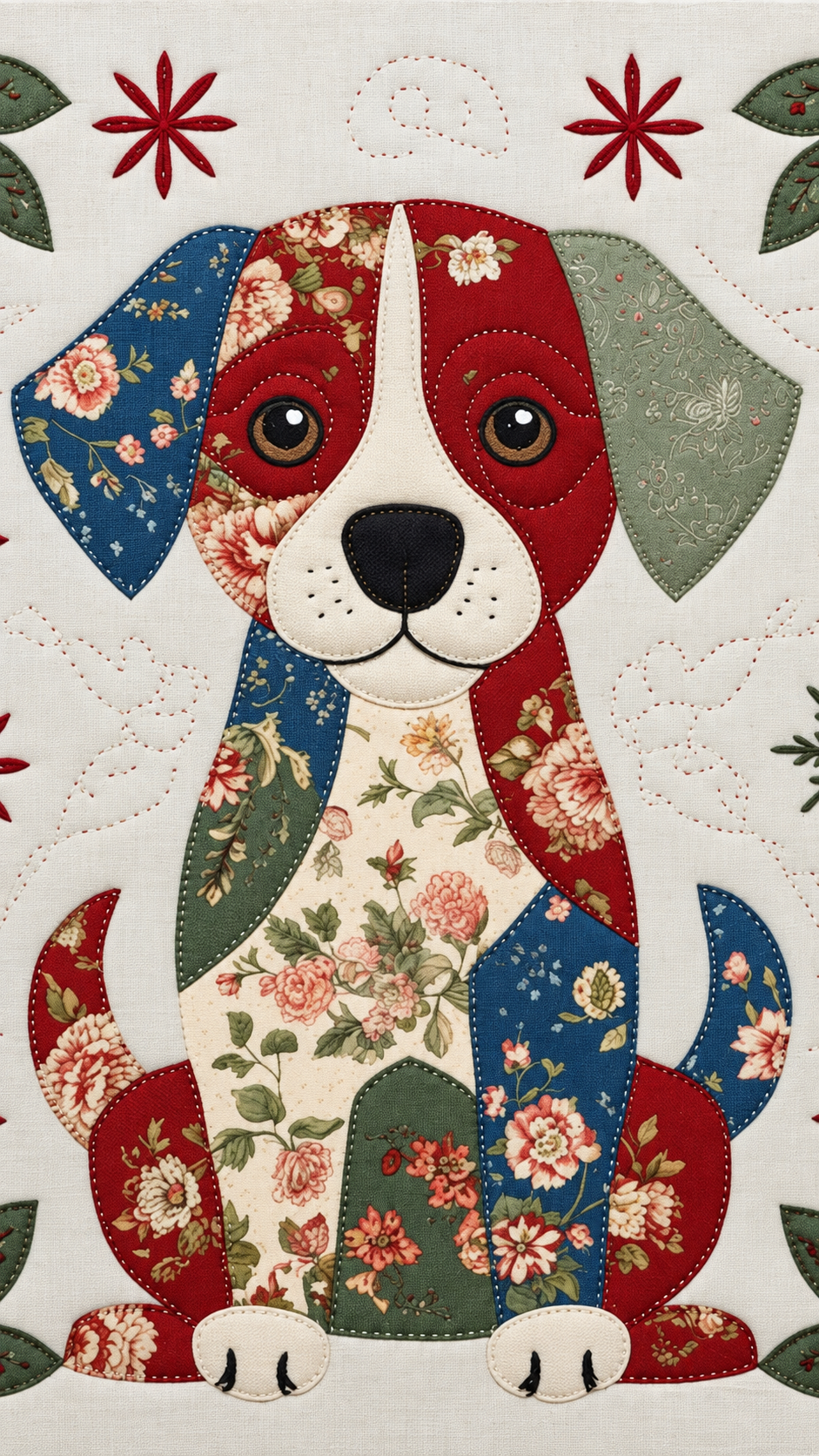
What makes this patchwork dog quilt especially interesting is the way individual fabric sections define the dog’s anatomy. Instead of constructing the animal from one large piece of fabric, the head, ears, muzzle, chest, legs, body, and tail can be divided into separate appliqué shapes. Red, navy, sage green, cream, and floral fabrics create a traditional patchwork appearance while still allowing the silhouette of the dog to remain easy to recognize. Decorative topstitching around each shape gives the finished project an attractive handmade character.
This tutorial uses a combination of machine appliqué, patchwork techniques, quilting, layering, and decorative stitching. A practical finished block size is approximately 16 x 24 inches (40.5 x 61 cm), although the pattern can easily be enlarged or reduced. Beginners can simplify the design by using fewer fabric sections, while experienced quilters can add detailed quilting, embroidery, and more elaborate fabric combinations.
Materials, Measurements, and Preparing the Dog Pieces
Begin with a background rectangle approximately 18 x 26 inches (46 x 66 cm). This gives you additional fabric around the edges for quilting and final trimming. After completing the appliqué and quilting, the block can be squared to approximately 16 x 24 inches (40.5 x 61 cm).
DISCOVER MORE FREE PATTERNS HERE!
Choose quilting-weight cotton for the background and dog pieces. You will need approximately 1/2 yard (0.45 m) of background fabric, plus assorted scraps for the animal. This project is ideal for leftover floral, geometric, solid, and small-scale printed fabrics.
Select approximately six to ten coordinating fabrics. A particularly attractive combination includes deep red, navy blue, sage green, ivory, brown, and vintage floral prints. The important consideration is contrast. Adjacent dog sections should be different enough that their individual shapes remain visible.
You will also need lightweight fusible web, batting, backing fabric, coordinating sewing thread, black embroidery thread, fabric scissors, an iron, pins or clips, a removable fabric marker, and a sewing machine. A small appliqué or embroidery needle is useful for finishing details by hand.
Divide the dog into recognizable pattern sections: two main head pieces, two ears, eye patches if desired, two muzzle sections, nose, central chest, side body sections, front legs, paws, hind legs, and tail sections. Trace these individual shapes onto the paper side of the fusible web.
Before cutting the final fabric, arrange your colors on the work surface. Think of the Patchwork Dog Pattern as a fabric puzzle. The goal is not perfect symmetry. Using different prints on the left and right sides creates the distinctive scrappy appearance that makes this quilt so appealing.
Building the Patchwork Dog Appliqué
Place the fusible-web templates on the wrong side of the selected fabrics and fuse according to the manufacturer’s instructions. Cut each piece carefully along the traced outline. Curves around the ears, muzzle, paws, and head should be smooth because these edges will remain visible after appliqué stitching.
Position the background fabric on a flat surface and lightly mark its vertical center. Begin assembling the dog appliqué from the largest central pieces. The chest is a useful reference point because it determines the alignment of the body and head.
Arrange the main body sections around the chest. Allow neighboring pieces to meet cleanly or overlap by approximately 1/8 inch (3 mm) where appropriate. Continue upward with the neck and head sections. Do not permanently fuse anything until the entire silhouette looks balanced.
Add the ears on either side of the head. Slight asymmetry can make the dog appear more natural. Contrasting fabrics work particularly well here; for example, a dark navy floral ear can sit beside a softer sage-green ear.
Next position the cream-colored muzzle sections over the lower face. Add a dark brown or black nose at their center. Small eye circles can be constructed from several fabric layers: a dark outer circle, brown or amber iris, black pupil, and a tiny white highlight.
When you are satisfied with the arrangement, carefully fuse the pieces to the background. Work gradually instead of moving the iron across the entire block. This prevents small appliqué pieces from shifting before they are secured.
Stitching, Facial Details, and Decorative Quilting
Once the appliqué has been fused, stitch around every major shape. A narrow blanket stitch, small zigzag stitch, or straight appliqué stitch can all work well. Straight stitching approximately 1/8 inch (3 mm) inside the raw edge creates a charming folk-art finish.
Use thread colors that coordinate with each fabric if you want subtle outlines. Alternatively, one neutral or dark thread can visually connect all of the individual patchwork pieces. A stitch length of approximately 2.0–2.5 mm works well for most quilting cotton.
Pay special attention to the face because it determines the dog’s expression. Stitch around the eyes slowly. Add a curved mouth extending downward from the nose and then outward toward each side of the muzzle. Small embroidered dots can represent whisker follicles.
Decorative stitching can also be added inside the fabric shapes. Gentle curved lines above the eyes suggest brows and expression. Small quilting lines within the ears, legs, or chest add texture without overwhelming the colorful prints.
After the appliqué is complete, create a traditional quilt sandwich with backing fabric on the bottom, batting in the middle, and the appliquéd top facing upward. Baste all three layers securely.
Quilt the background with loose curves, loops, leaves, or other simple motifs. Keep the quilting around the dog’s outline relatively close so the appliqué stands slightly above the background. This produces dimensional separation and makes the patchwork dog the visual focus.
Finishing the Patchwork Dog Quilt Block
After quilting, place the block on a cutting mat and square the edges. A finished measurement around 16 x 24 inches (40.5 x 61 cm) creates an attractive vertical wall panel, but you can trim according to your intended use.
If making a wall hanging, prepare approximately 2 1/4-inch (5.7 cm) binding strips. Join the strips diagonally, press them in half lengthwise, and attach the binding around the perimeter using your preferred quilt-binding method.
For a pillow, trim the completed dog block to your preferred cushion size and add an envelope or zipper backing. A 16 x 20-inch (40.5 x 51 cm) version works nicely when the lower body is slightly shortened.
You can also turn the block into a tote bag. In this case, use firmer batting or fusible fleece behind the appliqué panel. Quilt the panel first, then incorporate it into your favorite structured tote construction.
For a larger quilt, surround the finished block with borders or patchwork squares. Several animal blocks could even be combined into an animal appliqué quilt, with each dog using a different collection of fabric scraps.
Give the completed quilt a final inspection. Secure loose threads, check the appliqué edges, and lightly press from the back when necessary. Avoid flattening heavily quilted areas with excessive pressure. Your finished Patchwork Dog Pattern should retain a soft, slightly dimensional appearance.
FAQ – Patchwork Dog Pattern
Is the Patchwork Dog Pattern suitable for beginners?
Yes, although it is best for confident beginners because the project contains several curved appliqué pieces. You can make the first version easier by reducing the number of individual fabric sections.
What fabric is best for this dog quilt?
100% quilting cotton is an excellent choice. It presses easily, holds appliqué shapes well, and is available in countless coordinating prints.
Can I use fabric scraps?
Definitely. In fact, fabric scraps are ideal for this pattern. Small floral prints, vintage designs, solids, and coordinating remnants help create the patchwork appearance.
How large should the finished block be?
Approximately 16 x 24 inches (40.5 x 61 cm) works well for a wall hanging. You can resize the templates for smaller or larger projects.
Do I need fusible web?
It is highly recommended. Fusible appliqué keeps the numerous curved pieces stable while you stitch around their edges.
Which stitch should I use around the appliqué?
A blanket stitch gives a traditional appliqué appearance. A narrow zigzag creates stronger edge coverage, while straight stitching produces a relaxed raw-edge quilt style.
Should I quilt over the dog pieces?
You can. Minimal quilting preserves more dimension, while additional quilting creates a flatter, highly textured result. Decorative stitching inside selected pieces can be especially attractive.
How do I make the eyes look expressive?
Use layered circles in brown, black, and white. Position the tiny white highlight consistently in both eyes. Even a very small highlight can make the expression appear more lively.
Can the dog colors be changed?
Absolutely. Try Christmas colors, pastels, farmhouse neutrals, bright rainbow scraps, denim, or reproduction fabrics. The scrappy dog quilt is highly adaptable.
What can I make with the finished block?
It can become a wall quilt, cushion, tote bag, quilt center panel, table decoration, or personalized gift for a dog lover.
Conclusion
The Patchwork Dog Pattern is a creative combination of quilting, fabric appliqué, decorative stitching, and scrap-friendly sewing. By breaking the dog into manageable fabric shapes, you can build an intricate-looking portrait without needing to piece every curved section with traditional seams.
The secret to an attractive result is careful fabric selection and patient placement. Combine floral quilting cotton, contrasting colors, fusible appliqué, expressive facial details, and decorative quilting to give every section definition. Red, navy, cream, sage, and vintage floral prints create a classic appearance, while brighter scraps can produce an entirely different personality.
Once you understand the basic construction, the design becomes wonderfully customizable. Change the ears, alter the color placement, enlarge the block, simplify the body sections, or surround it with patchwork borders. Whether displayed as a wall hanging or incorporated into a larger quilt, this Patchwork Dog Pattern turns ordinary fabric scraps into a distinctive handmade dog portrait.