
Creating adorable handmade accessories for babies is one of the most rewarding experiences for sewing enthusiasts. This Fabric Bib Pattern combines delicate floral prints, charming scalloped edges, soft cotton fabrics, and colorful details to create a beautiful collection of baby accessories.
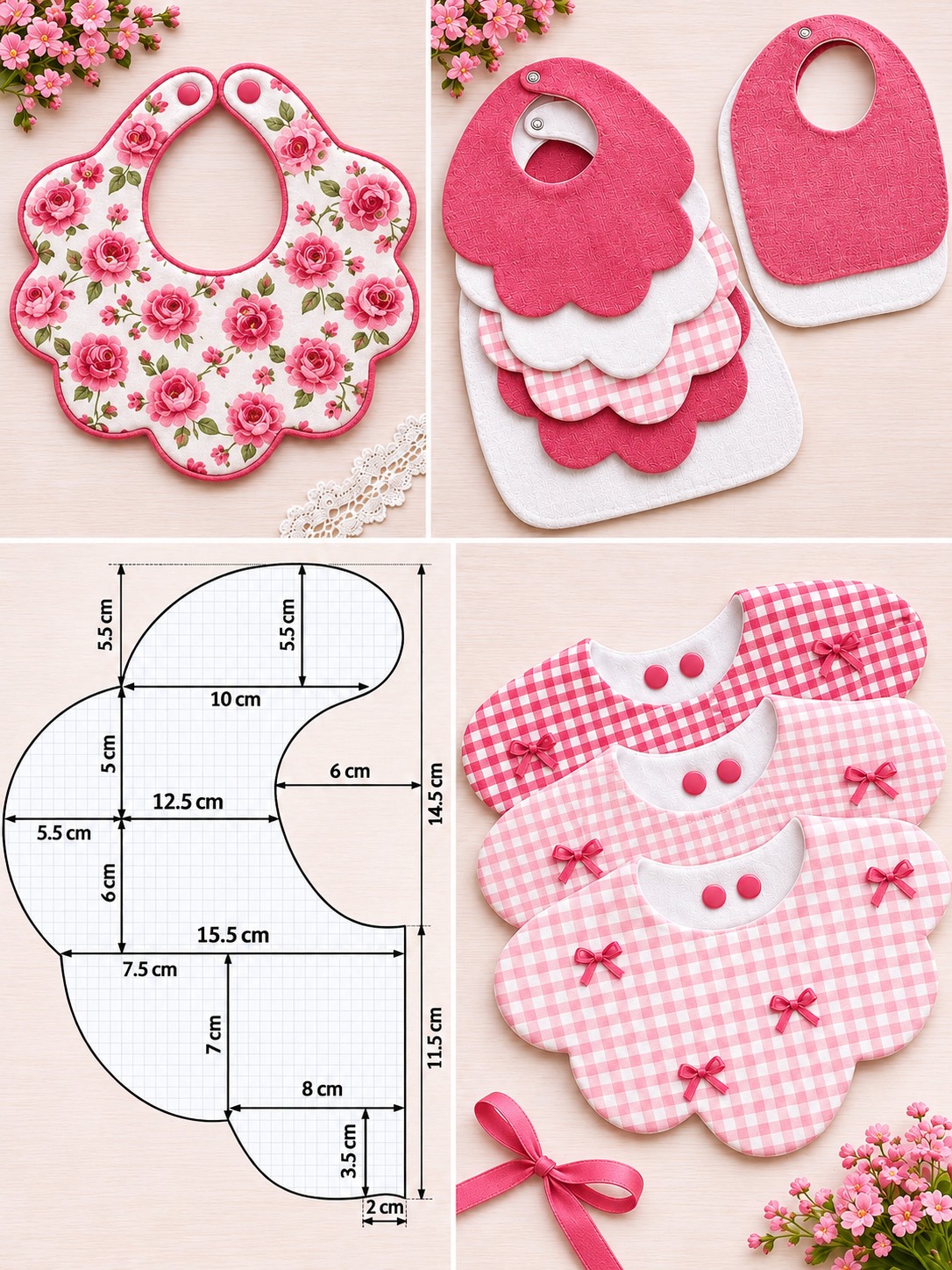
Inspired by the designs in the photograph, these bibs feature romantic pink roses, classic gingham prints, and elegant solid colors that make every piece special.Unlike ordinary rectangular bibs, these scalloped baby bibs have a distinctive flower-inspired silhouette that gives them a charming and sophisticated appearance.
Their layered construction allows you to combine decorative cotton fabric with an absorbent backing, making them both attractive and useful. They are wonderful additions to handmade baby gift baskets, baby shower presents, and personalized nursery collections.
Whether you are an experienced quilter or just beginning your sewing journey, this project offers an excellent opportunity to practice curved seams, fabric layering, and decorative finishing techniques.
DISCOVER MORE FREE PATTERNS HERE!
With a few basic sewing supplies and carefully selected fabrics, you can create an entire collection of handmade baby bibs. The following tutorial includes suggested measurements, fabric recommendations, and detailed instructions inspired by the photograph.
1. Materials and Measurements for the Fabric Bib Pattern
Choosing the right materials is essential when creating baby sewing projects. Soft, washable cotton fabrics are particularly suitable because they are easy to sew and comfortable against the skin. Select fabrics that can withstand frequent washing while maintaining their attractive colors and texture.
The photograph features a beautiful combination of pink floral cotton, white textured fabric, and classic pink gingham. These fabrics work wonderfully together, creating a coordinated collection with a delicate vintage appearance. You can also experiment with baby blue, lavender, sage green, or pastel yellow.
Materials needed:
-
35 × 35 cm of printed cotton fabric
-
35 × 35 cm of cotton terry cloth or absorbent backing fabric
-
Lightweight cotton batting, optional
-
Matching cotton or polyester sewing thread
-
Baby garment snaps
-
Snap installation tool
-
Cotton bias binding, optional
-
Fabric scissors
-
Paper for drawing the pattern
-
Fabric marking pen
-
Sewing clips
-
Sewing machine
-
Iron and ironing board
Suggested finished measurements:
| Bib section | Measurement |
|---|---|
| Overall length | 26 cm |
| Overall width | 28–30 cm |
| Neck opening width | 10–11 cm |
| Neck opening depth | 10–12 cm |
| Neck fastening tab width | 4–5 cm |
| Scalloped edge depth | 3–4 cm |
| Fastening overlap | 2–3 cm |
| Seam allowance | 0.7 cm |
These measurements are suggested starting dimensions inspired by the photograph, rather than a verified full-size template. Prepare a paper mock-up and adjust the neck opening and fastening overlap for the intended size before cutting your final fabric.
For the backing, cotton terry cloth is an excellent choice because of its absorbent properties. Cotton flannel and muslin are also suitable alternatives for lightweight bibs. Avoid excessively thick layers that could make the finished bib stiff or uncomfortable.
Before beginning your project, prewash and press all washable fabrics. This helps prevent uneven shrinkage after the bib is completed. Inspect the materials for rough textures, loose threads, and decorative elements that could detach during use.
2. How to Create and Cut the Scalloped Baby Bib Pattern
The most distinctive feature of this scalloped fabric bib is its beautiful rounded silhouette. Instead of using a traditional rectangular shape, the lower portion features several gentle curves resembling flower petals. This design creates an elegant appearance without requiring complicated sewing techniques.
Begin by drawing a rectangle approximately 28–30 cm wide and 26 cm tall on a large piece of pattern paper. Fold the paper vertically through the center to create a symmetrical template. Draw half of the bib on one side, including the shoulder, neck opening, and decorative scallops.
Create three or four rounded scallops along the lower portion of the half-template. Use a small circular object or a curved sewing ruler to create smooth, consistent shapes. Avoid extremely deep curves because they can make turning and finishing the fabric more difficult.
Draw the curved neckline and extend the upper sections to form the fastening tabs. Unlike the symmetrical lower portion, the fastening tabs may need slightly different lengths to accommodate the overlapping closure. Unfold the paper and refine the tabs before adding a 0.7 cm seam allowance around the entire outline.
Fabric cutting instructions:
| Pattern piece | Quantity |
|---|---|
| Decorative cotton front | 1 |
| Absorbent fabric backing | 1 |
| Optional lightweight batting | 1 |
| Small cotton snap reinforcement | 2 |
Place the completed paper pattern over your decorative fabric and secure it using sewing clips or pins. Pay attention to the direction of the floral print, particularly when working with roses, animals, or other directional designs. Cut carefully around every scalloped edge.
Repeat the cutting process with the backing fabric and optional batting. Keeping the layers accurately aligned will help you achieve a smooth and professional result. If you are planning to make several DIY baby bibs, prepare a reusable cardboard template to make future cutting easier.
3. Step-by-Step Instructions for Sewing the Fabric Bib
Once all the materials have been prepared, you can begin assembling your handmade quilted baby bib. The construction process is relatively simple, although the scalloped curves require patience and careful stitching. Working slowly around each curved section will produce a much cleaner finish.
Step 1 – Prepare the quilted front. If you are using batting, place it underneath the decorative cotton fabric with the printed side facing upward. Secure the layers with temporary basting stitches. Sew gentle quilting lines across the surface, using straight, diagonal, or curved stitches to create a decorative texture.
Step 2 – Assemble the fabric layers. Place the absorbent backing fabric over the decorative front with their right sides facing each other. The batting should remain underneath the decorative fabric. Align the neckline, fastening tabs, and scalloped edges before securing the layers with sewing clips.
Step 3 – Sew around the bib. Using a 0.7 cm seam allowance, stitch around the entire outline. Leave an opening approximately 5–6 cm long along an accessible outer edge. Reduce your sewing speed when approaching the scalloped curves, and adjust the fabric carefully with the needle lowered when necessary.
Step 4 – Turn and shape the fabric. Trim excess batting from the seam allowances to reduce bulk. Clip the inward curves and notch the outward curves without cutting through the stitching. Turn the bib right side out through the opening, gently shaping each rounded section with a blunt sewing tool.
Step 5 – Finish the edges and install the closure. Fold the raw edges of the opening inward and press carefully. Topstitch approximately 2–3 mm from the entire edge to close the opening and reinforce the shape. Add the garment snap according to its manufacturer’s instructions, using the reinforced fabric tabs and checking that the closure is securely attached and appropriately positioned.
4. Beautiful Fabric Combinations and Creative Bib Variations
One of the most exciting aspects of this Fabric Bib Pattern is the variety of beautiful designs you can create from the same basic template. The scalloped shape works wonderfully with romantic floral fabrics, playful gingham prints, and elegant solid colors. Each combination gives the finished bib a completely different personality.
The pink rose baby bib featured in the photograph is particularly charming. To recreate this appearance, select cream-colored cotton printed with medium-sized pink roses and green leaves. Finish the edges with pink topstitching or soft cotton bias binding for a beautiful contrasting border.
For a classic vintage style, choose pink and white gingham fabric. The small checkered pattern creates a lovely appearance that pairs beautifully with white cotton backing. Instead of attaching small decorative ribbon bows as shown in the photograph, embroider bow motifs directly onto the fabric to avoid detachable embellishments.
Beautiful color combinations to try:
-
Baby pink and ivory for a delicate traditional appearance.
-
Lavender and white for a soft floral design.
-
Tiffany blue and cream for an elegant pastel combination.
-
Sage green and beige for a natural nursery theme.
-
Peach and white for a cheerful summer collection.
-
Sapphire blue and white for a striking contrast.
-
Christmas red and cream for festive holiday designs.
Another wonderful variation is the patchwork baby bib. Combine small cotton squares measuring approximately 5 × 5 cm to create a decorative fabric panel. Press the seams flat, add the optional batting, and cut the completed patchwork panel using your scalloped template. This technique is ideal for using leftover quilting fabrics.
You can also create coordinating handmade gift sets containing scalloped bibs, traditional rectangular bibs, burp cloths, and small washcloths. Always prioritize soft materials, secure stitching, and appropriate sizing. Bibs should be worn only under adult supervision and removed before sleeping, as they are not intended to be sleepwear.
Frequently Asked Questions (FAQ)
Is this Fabric Bib Pattern suitable for beginners?
Yes. The pattern uses basic sewing techniques, including fabric cutting, straight stitching, curved seams, and topstitching. Beginners can practice on a simpler rounded bib before attempting the decorative scalloped version.
What is the best fabric for handmade baby bibs?
Quilting cotton is an excellent choice for the decorative front, while cotton terry cloth, flannel, or muslin can provide an absorbent backing. Choose soft, washable materials suitable for contact with a baby’s skin.
Do baby bibs need batting?
No. Batting is optional and mainly provides a quilted appearance. An absorbent cotton backing may be sufficient for everyday bibs, particularly when you want a lightweight and flexible finished piece.
How can I make the scalloped edges look professional?
Use a symmetrical paper template, maintain consistent seam allowances, and sew slowly around each curve. Carefully clip and notch the seam allowances before turning the fabric. Pressing and topstitching will help maintain the finished shape.
Can I make reversible fabric bibs?
Yes. Use attractive, absorbent fabrics on both sides and a garment closure suitable for the reversible construction. This allows you to enjoy two different designs in one handmade accessory.
Can I use fabric scraps for this pattern?
Absolutely. Small fabric scraps can be joined together to create a beautiful patchwork front. This is an excellent way to use leftover quilting cotton and create unique fabric combinations.
Can I make different sizes using the same pattern?
Yes. Adjust the overall length, width, neckline, and fastening tabs independently. Make a paper or fabric mock-up to check the fit rather than simply enlarging the entire pattern.
What type of closure should I use?
Properly installed garment snaps designed for baby clothing are a suitable option. Follow the manufacturer’s installation instructions and inspect the closure regularly. Stop using the bib if a snap becomes loose or damaged.
Can I decorate the bib with buttons and ribbon bows?
For infant use, it is better to avoid small detachable decorations, including ornamental buttons, beads, and ribbon bows. Embroidered flowers, hearts, and bow designs provide an attractive alternative.
How should handmade fabric bibs be washed?
Follow the washing instructions for your chosen fabrics. Prewashed cotton fabrics are generally easy to maintain. Inspect the seams and fastening components after washing, and allow the bib to dry completely before using it again.
Can I make these bibs as baby shower gifts?
Certainly. A coordinated collection of floral, gingham, and solid-colored bibs makes a charming handmade gift. Combine the bibs with matching burp cloths or other suitable baby accessories for a personalized presentation.
Conclusion
The Fabric Bib Pattern is a delightful sewing project that combines creativity, beautiful quilting techniques, and charming decorative details. Its flower-inspired scalloped edges, delicate floral prints, and soft fabric layers make it a wonderful addition to any handmade baby accessory collection.
Whether you choose romantic pink roses, traditional gingham, elegant pastel fabrics, or colorful patchwork combinations, this versatile pattern provides endless opportunities for personalization. It is also an excellent way to develop your sewing skills while transforming leftover fabrics into beautiful creations.
With carefully selected materials, precise cutting, and neat stitching, you can create an entire collection of handmade scalloped baby bibs that celebrates the beauty of quilting and the joy of making something special by hand.