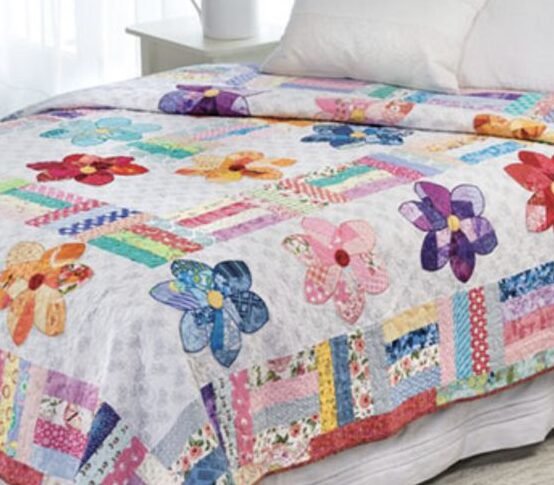
The Dresden Plate Quilt – Tutorial is one of the most beloved and timeless quilt patterns in the world of patchwork. Known for its elegant circular design made of fabric “petals,” this quilt block has graced homes for generations. It combines traditional craftsmanship with endless opportunities for creativity, making it perfect for both beginner and advanced quilters. Whether you’re drawn to its vintage charm or want to give it a modern twist, learning how to create a Dresden Plate will add a stunning piece of quilting artistry to your collection.
The beauty of the Dresden Plate Quilt lies in its versatility. You can make it bold and bright with contrasting fabrics or soft and subtle with coordinated tones. It’s an ideal project for using fabric scraps or showcasing your favorite prints. The curved shapes create movement and texture, turning any quilt into a masterpiece. This tutorial will guide you through each step, from cutting your pieces to assembling and finishing your block beautifully.
If you love patterns that blend classic design with creative freedom, this one will quickly become a favorite. Let’s dive into how to make your very own Dresden Plate Quilt, full of color, charm, and character.

1. Materials and Tools Needed for the Dresden Plate Quilt
Before you start your Dresden Plate Quilt – Tutorial, it’s important to gather all the necessary materials. You will need an assortment of cotton fabrics in different colors or prints. Quilting cotton works best since it’s easy to sew and holds its shape well. The number of fabrics depends on how many petals (or blades) you plan to include in your Dresden circle—typically between 12 and 20 per block.
SEE OTHER FACE PATTERNS HERE!
You’ll also need a Dresden Plate template, which you can buy or make yourself. Templates come in various sizes, and they help ensure each fabric blade is cut perfectly. A rotary cutter, cutting mat, and ruler are essential tools for precise cutting.
For assembly, you’ll need a sewing machine, thread, pins, and an iron for pressing seams. If you prefer hand sewing, you can also piece your Dresden Plate manually for a more traditional approach.
Choose a background fabric that complements your petals. Light neutrals like cream or white create contrast, while darker fabrics add drama. You’ll also need a small circle of fabric for the center of each Dresden block, which can be appliquéd or stitched in place.
Lastly, don’t forget batting and backing fabric if you plan to turn your block into a complete quilt or wall hanging. These finishing materials give structure and comfort to your piece. Having all your materials ready will make your quilting process smooth and enjoyable.
Once everything is gathered, you’re ready to bring your Dresden Plate Quilt to life.
2. How to Cut and Assemble the Dresden Plate Pieces
The most exciting part of the Dresden Plate Quilt – Tutorial begins with cutting and assembling your fabric blades. Start by tracing your template onto each fabric piece and carefully cutting along the lines with your rotary cutter. Make sure your angles and points are precise for a clean, symmetrical look when joined together.
Each blade forms one petal of the Dresden Plate. Fold the wider end of each piece in half, right sides together, and stitch across the top. Trim the corner and turn it right side out, pressing it to form a pointed edge. Repeat this process for all your blades—this gives them that classic “petal” look.
Next, lay out your blades in a circle to check your color arrangement. This step is key because it ensures your pattern flows visually before you begin sewing. Experiment with different layouts until you find one that feels balanced and pleasing to the eye.
Once satisfied, begin joining your petals together. Sew each blade edge-to-edge with a quarter-inch seam allowance. Press your seams open or to one side depending on your preference. As the circle forms, you’ll start to see the beautiful Dresden Plate design emerge.
When all the blades are joined, you can add the small circle in the center. This can be hand-appliquéd or machine-stitched, depending on your style. The center not only completes the design but also hides the raw seams where all the blades meet.
Finally, press your completed Dresden Plate flat. Your block is now ready to be attached to a background fabric, which you can quilt or embellish further.
3. Adding the Dresden Plate to the Quilt Block
Now that your plate is assembled, it’s time to attach it to the background. This step in the Dresden Plate Quilt – Tutorial transforms your fabric circle into a true quilt block.
Start by cutting your background fabric slightly larger than your finished plate. Center the Dresden Plate on the fabric and pin it securely in place. You can either hand-stitch around the edges using an invisible appliqué stitch or machine-sew with a zigzag or blanket stitch for added durability.
When stitching, make sure to keep your fabric flat and smooth to avoid puckering. If you’re using a sewing machine, adjust your settings for slow and even stitches, especially around the curves.
Once the plate is securely attached, give your block a final press. This not only sets your stitches but also ensures everything lies neatly against the background.
You can stop here and use your block as a single decorative piece—perfect for pillows, wall art, or table runners. Or you can make multiple Dresden blocks to create a full quilt. Arrange them in rows or offset them for a modern, creative look.
When piecing your blocks together, be sure to match seams carefully and press each joining seam to maintain a clean, polished finish. This attention to detail will make your quilt look professional and cohesive.
Adding sashing or borders can also enhance the design and frame your Dresden Plates beautifully. Choose fabrics that complement the tones of your petals for a harmonious overall appearance.
4. Finishing and Customizing Your Dresden Plate Quilt
Once all your Dresden Plate Quilt blocks are assembled, it’s time for the finishing touches. This is where your creativity truly shines. Layer your quilt top with batting and backing, then secure the layers with quilting stitches. You can hand-quilt for a vintage effect or machine-quilt for a more modern look.
When choosing your quilting pattern, consider designs that complement the circular motion of the Dresden Plates. Swirls, arcs, or echo quilting around the petals all enhance the dimensional look of the block.
Binding your quilt adds the final professional edge. Choose a binding fabric that contrasts nicely with the background or ties together the colors of your petals. Hand-stitching the binding to the back of the quilt creates a neat and durable finish.
Customization is one of the best parts of this project. You can experiment with different sizes—make smaller plates for a delicate look or oversized ones for bold impact. Try mixing fabrics like batiks, solids, or florals to achieve different moods.
Adding embellishments like embroidery, beads, or buttons to the center of each Dresden Plate can make your quilt stand out even more. It’s these little details that make handmade quilting truly special.
Once completed, your Dresden Plate Quilt can be used as a cozy bed cover, a decorative throw, or a cherished handmade gift. Its beauty and craftsmanship will bring warmth and charm to any space.
FAQ – Dresden Plate Quilt – Tutorial
Q1: Is the Dresden Plate Quilt beginner-friendly?
Yes, it’s suitable for beginners who have some basic sewing knowledge. The curved shapes might take practice, but the pattern is very forgiving.
Q2: What fabrics are best for a Dresden Plate Quilt?
100% cotton fabrics are ideal because they press easily and maintain structure. You can also mix prints and solids for visual interest.
Q3: Can I make the Dresden Plate without a template?
While possible, a template ensures precision and consistency. It’s highly recommended for a professional result.
Q4: How do I keep my Dresden Plate circle flat?
Press your seams carefully and ensure all your blades are cut and sewn with equal accuracy. This helps avoid puckering in the center.
Q5: What’s the best way to quilt the finished piece?
Use echo quilting, free-motion, or simple straight lines that complement the plate’s curves. It enhances both texture and dimension.
Q6: Can I resize the pattern?
Absolutely! By adjusting your template, you can make smaller Dresden Plates for mini quilts or larger ones for bed-size quilts.
Conclusion
The Dresden Plate Quilt – Tutorial brings together tradition, artistry, and personal creativity. You’ve learned how to select fabrics, assemble your petals, and turn them into stunning quilt blocks that radiate charm.This pattern invites you to experiment with color, texture, and form, creating a quilt that’s both timeless and uniquely yours.
PATTERN VIDEO:
Whether you’re quilting for yourself or gifting your work to someone special, the Dresden Plate will always be a showstopper. We hope this guide inspires you to start your own version of this iconic quilt! Leave your thoughts, experiences, and suggestions below—your feedback helps keep the quilting community vibrant and inspired!