
The Armrest Organizer for Sofa Pattern is a beautiful and practical sewing project that combines the comfort of quilting with the convenience of everyday home organization. Designed to fit over the armrest of a sofa or favorite armchair, this handmade fabric organizer provides a dedicated place for remote controls, reading glasses, smartphones, and other small essentials. Its attractive quilted surface, decorative fabric pockets, and coordinating binding create a charming accessory that can complement almost any living room while keeping frequently used items within easy reach.
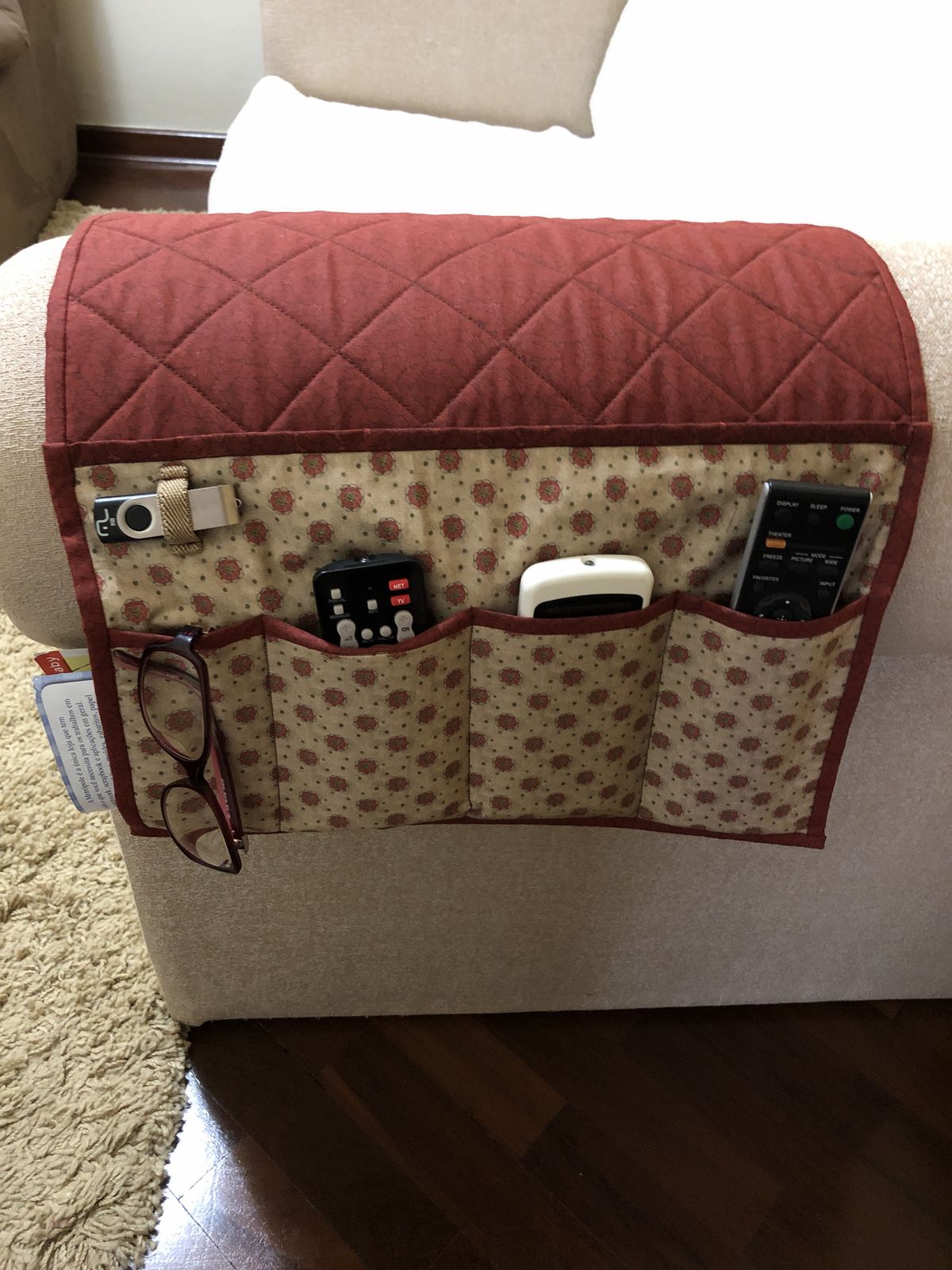
One of the most appealing features of this Quilted Sofa Armrest Organizer is its clever construction. The upper section features a padded, diamond-quilted fabric panel that rests comfortably over the furniture arm, while the lower portion includes several roomy storage pockets. The design shown in the image combines a deep burgundy quilted top with beige floral fabric and matching burgundy binding. These warm, traditional colors give the organizer a timeless country-style appearance, making it especially suitable for cozy living rooms, reading corners, and comfortable family spaces.
Creating your own DIY Sofa Armrest Organizer is also an excellent way to practice useful sewing and quilting techniques. This beginner-friendly project introduces fabric layering, straight-line quilting, pocket construction, topstitching, and binding application without requiring complicated pattern pieces. It is also highly customizable, allowing you to choose your favorite fabrics, adjust the number of pockets, and adapt the measurements to different furniture styles. Whether you are making one for your own home or preparing a thoughtful handmade gift, this practical organizer offers a wonderful combination of beauty, creativity, and functionality.
1. Materials and Measurements for the Quilted Sofa Armrest Organizer
The first step in creating a beautiful Armrest Organizer for Sofa is selecting fabrics that combine durability, comfort, and visual appeal. Because the organizer will be used regularly, the material should withstand repeated handling while maintaining its shape. High-quality quilting cotton is an excellent choice because it is easy to cut, press, sew, and wash. For a more structured finish, combine the cotton fabric with lightweight batting and fusible interfacing.
DISCOVER MORE FREE PATTERNS HERE!
The organizer featured in the image uses two coordinating fabrics. The upper portion is made from a solid burgundy material with diagonal quilting lines, creating a classic diamond pattern. The pocket section features a delicate beige fabric decorated with small red floral motifs. Narrow burgundy binding finishes the edges and pocket openings, connecting the two fabrics into one coordinated design.
For this tutorial, we will make an organizer approximately 40 cm wide × 75 cm long (15¾ × 29½ inches). This size works well for many standard upholstered sofa arms, but it should be adjusted to fit your furniture. Measure from the inside of the sofa arm, across its top, and down the outside to determine the total length needed.
Materials needed:
-
50 × 85 cm (20 × 33½ in) burgundy cotton fabric for the quilted upper panel.
-
50 × 45 cm (20 × 17¾ in) beige floral cotton fabric for the pockets.
-
50 × 85 cm (20 × 33½ in) coordinating cotton fabric for the backing.
-
50 × 85 cm (20 × 33½ in) lightweight cotton or polyester batting.
-
45 × 35 cm (17¾ × 13¾ in) medium-weight fusible interfacing for pocket reinforcement, if desired.
-
Approximately 4 m (4⅜ yd) of coordinating double-fold binding, including the pocket edges.
-
Matching polyester or cotton sewing thread.
-
Sewing machine with a straight-stitch function.
-
Walking foot or quilting foot.
-
Rotary cutter and self-healing cutting mat.
-
Quilting ruler and fabric scissors.
-
Straight pins or fabric clips.
-
Iron and ironing board.
-
Fabric marking pencil or removable quilting marker.
The measurements above allow for trimming and adjustments during construction. The finished design will feature a long padded base panel and a lower pocket section. For a layout similar to the photograph, plan a pocket area approximately 40 cm wide and 18–20 cm deep. Four individual compartments provide convenient storage for remote controls, glasses, and small accessories.
When selecting fabrics, consider how the colors will coordinate with the sofa. Burgundy and beige create a warm, vintage appearance, while navy blue and white offer a more contemporary style. Emerald green with cream details creates an elegant design, and soft gray with floral accents provides a neutral option. Small printed patterns are particularly effective for pockets because they add personality without overwhelming the organizer.
Before cutting, press all fabrics carefully. If you prefer prewashed cotton, wash each fabric consistently to minimize differences in shrinkage. Check the direction of any printed designs so the motifs will appear upright when the organizer hangs over the sofa arm. Careful preparation helps produce a polished handmade quilted sofa organizer.
2. How to Make the Diamond-Quilted Armrest Panel
The quilted upper panel is one of the most attractive elements of this Sofa Armrest Organizer Sewing Pattern. The padded fabric provides structure, protects the furniture surface, and creates the decorative diamond pattern visible in the photograph. This section is made using a simple quilting sandwich consisting of the main fabric, batting, and backing fabric.
Begin by cutting a burgundy fabric rectangle measuring approximately 42 × 77 cm (16½ × 30⅜ in). Cut matching batting and backing pieces slightly larger, approximately 46 × 81 cm (18⅛ × 31⅞ in). The additional material provides room for the layers to shift slightly during quilting. Once finished, the entire panel will be trimmed to 40 × 75 cm (15¾ × 29½ in).
Place the backing fabric on a clean work surface with the wrong side facing upward. Lay the batting over the backing, smoothing away any wrinkles. Position the burgundy fabric on top with the right side facing upward. Secure the three layers with quilting safety pins, temporary basting spray, or long hand-basting stitches. Work from the center toward the outside edges to prevent fabric distortion.
To create the diamond quilting pattern, use a removable fabric marker and quilting ruler to draw diagonal lines across the panel. Space the lines approximately 8 cm (3⅛ in) apart. Draw a second set of diagonal lines in the opposite direction, forming a series of diamonds. This traditional quilting design adds texture and helps keep the fabric layers securely together.
Attach a walking foot to your sewing machine if available. Begin quilting along the marked diagonal lines using a medium stitch length of approximately 2.5–3 mm. Sew slowly and consistently, avoiding unnecessary stretching or pulling. After completing the first set of diagonal lines, quilt the second set to form the diamond pattern. Gently smooth the fabric between stitching passes.
Once the quilting is complete, remove any basting pins and trim the panel to the desired 40 × 75 cm finished size. Check that the corners are square and the edges are straight. If desired, round the upper corners slightly to create a softer appearance. The photograph shows a gently curved quilted section, which helps the organizer conform naturally to the sofa arm.
Before proceeding, place the quilted panel over your furniture armrest to check the fit. The upper section should rest smoothly across the arm, with enough fabric extending down the outside to support the pockets. Some sofa arms are wide and rounded, while others are narrow and rectangular. Making small adjustments now ensures that your quilted armrest caddy will sit comfortably without excessive folding or bunching.
3. Sewing the Storage Pockets and Assembling the Sofa Organizer
The storage pockets are the most functional part of the Armrest Organizer for Sofa Pattern. They provide separate spaces for television remotes, eyeglasses, mobile phones, reading accessories, and other small items. In the reference design, the pocket section includes four compartments with a softly curved upper edge and contrasting burgundy binding. This combination creates an attractive decorative feature while keeping the pockets easy to access.
Begin by cutting a rectangle of beige floral fabric approximately 42 × 25 cm (16½ × 9⅞ in). This allows extra height for a slightly gathered or eased pocket front. Cut a second piece of matching fabric approximately 42 × 20 cm (16½ × 7⅞ in) if you want a lined pocket. For a simpler version, use a single pocket panel and finish the top edge with binding. Lightweight interfacing can be applied to the wrong side of the pocket fabric to provide additional strength.
To reproduce the decorative appearance, gently shape the upper edge of the pocket panel into four shallow curves. These curves are optional, but they closely resemble the organizer in the image. Keep each curved section approximately 10 cm (4 in) wide. Use a paper template to maintain consistent shapes. Finish the curved edge with narrow burgundy bias binding, sewing carefully around each curve to avoid puckering.
Next, position the prepared pocket panel over the lower outside portion of the quilted base. Align the bottom and side edges of the pocket fabric with the main panel. If you want extra pocket capacity, distribute a small amount of fullness evenly along the lower edge before stitching. This gives the pockets enough space to hold thicker objects such as multiple remote controls.
Secure the pocket panel with pins or sewing clips. Sew along the sides and bottom using a 6 mm (¼-inch) seam allowance, leaving the upper curved edge open. Reinforce the top corners of the pocket panel with additional stitching because these areas experience frequent pulling during use. Remove the clips and smooth the fabric to check that the pocket panel is securely attached.
To create four individual compartments, mark three vertical dividing lines across the pocket section. For a 40 cm wide organizer, place the dividing lines approximately 10 cm (4 in) apart. Stitch along each line from the bottom edge to the top of the pocket panel. Backstitch securely at the upper ends to reinforce the openings. If your pocket panel contains added fullness, distribute it carefully between the dividers before sewing.
The photograph also features a small loop near the upper left side of the pocket area, suitable for holding a lightweight accessory. To add this detail, cut a narrow fabric strip approximately 3 × 12 cm (1¼ × 4¾ in). Fold the strip lengthwise, press the raw edges inward, and stitch along the open side. Fold the finished strip into a loop and attach it securely near the side of the organizer. This additional feature makes the DIY sofa storage caddy even more useful.
4. Finishing, Customizing, and Using Your Quilted Sofa Armrest Organizer
After completing the quilted panel and storage pockets, the final stage is to finish the edges and prepare the Quilted Sofa Armrest Organizer for everyday use. A clean binding finish is especially important because the organizer will be handled frequently. Coordinating fabric binding gives the project a professional appearance while protecting the raw edges from wear.
Begin by examining the organizer and trimming any uneven edges. If necessary, use a quilting ruler to straighten the sides and bottom. Prepare double-fold bias binding from burgundy cotton fabric. Bias binding is especially helpful if your organizer has curved upper corners. For straight edges only, straight-grain binding can also work well.
Attach the binding around the outer perimeter of the organizer, beginning along a straight section. Sew slowly and carefully, maintaining a consistent seam allowance. When you reach the corners, fold or ease the binding neatly according to the edge shape. Finish the binding by folding it over the raw edges and securing it with machine stitching or small hand stitches.
Once the binding is complete, inspect the pocket divisions and reinforce any areas that may experience additional stress. The upper corners of each compartment should be securely stitched because remote controls and other objects can place pressure on these seams. Trim loose threads and gently press the finished organizer using a temperature appropriate for the selected fabrics and batting.
For additional stability, consider adding a non-slip backing to the area that rests on the furniture arm. A removable nonslip mat placed beneath the organizer may help reduce shifting on smooth upholstery. Avoid adhesives or rubberized materials that could stain delicate furniture. Test any accessory on an inconspicuous area before regular use.
One of the greatest advantages of this pattern is the ability to customize the pocket arrangement. If you use several remote controls, create wider compartments to accommodate their shapes. For reading glasses, add a narrow padded pocket that offers extra protection. A small fabric loop can hold a lightweight pen or accessory, while a separate shallow compartment is convenient for notes and bookmarks.
The finished Handmade Sofa Armrest Organizer also makes a thoughtful gift for family members and friends. It is especially useful for people who enjoy reading, watching television, knitting, crocheting, or relaxing in a comfortable chair. By selecting fabrics that coordinate with the recipient’s home, you can create a practical accessory that feels personal and carefully made.
Frequently Asked Questions About the Armrest Organizer for Sofa Pattern
Is the Armrest Organizer for Sofa Pattern suitable for beginners?
Yes. This project is suitable for beginners who know how to sew straight seams and handle basic quilting materials. The diamond quilting, pocket construction, and binding provide excellent opportunities to develop sewing skills without requiring complicated pattern pieces.
What is the best fabric for a quilted sofa armrest organizer?
High-quality cotton quilting fabric is an excellent choice because it is durable, easy to sew, and available in many colors and prints. Canvas and lightweight upholstery fabrics can also work, although thicker materials may require a heavier sewing machine needle and adjusted seam allowances.
How many pockets should a sofa organizer have?
Four compartments are a practical choice for the design shown in the image. However, you can create two, three, five, or more compartments depending on your needs. Larger pockets are useful for remote controls, while smaller pockets are convenient for glasses and accessories.
How do I make sure the organizer fits my sofa?
Measure the width and shape of your sofa arm before cutting the fabric. Determine how much material must extend across the top and down the outside of the furniture. Adjust the length and width of the quilted panel accordingly, leaving enough fabric for seam allowances and finishing.
Can I make this organizer without batting?
Yes, but the finished organizer will be thinner and less structured. Lightweight fusible interfacing can provide some support without adding much thickness. However, batting is recommended if you want the soft diamond-quilted appearance shown in the photograph.
Can the sofa organizer be machine washed?
If the organizer is made from washable cotton fabric, suitable batting, and securely stitched binding, it can generally be washed on a gentle cycle. Use mild detergent and cool water. Always consider the care instructions for any interfacing, backing, or decorative materials included in the project.
Can I add more pockets or a phone holder?
Absolutely. The pattern can be customized with wider pockets, narrow compartments, padded phone holders, or small accessory loops. Measure the objects you plan to store before sewing the dividing seams so that every pocket is appropriately sized.
How can I prevent the organizer from sliding off the sofa arm?
Ensure that the upper panel has enough length to rest securely across the furniture arm. The organizer’s fit and the weight distribution of stored objects affect stability. A removable nonslip pad may help, provided the material is safe for your sofa upholstery. Avoid overloading the pockets with heavy objects.
Conclusion
The Armrest Organizer for Sofa Pattern is a wonderful sewing project that combines practical home organization with the timeless beauty of quilted fabric. Its diamond-quilted upper section, decorative floral pockets, and coordinating binding create an attractive accessory that is both useful and stylish. The design offers a simple way to keep remote controls, reading glasses, and other everyday essentials organized without sacrificing the comfort or appearance of your living room.
Another appealing feature of this DIY Quilted Sofa Organizer is its flexibility. From traditional burgundy and beige floral fabrics to contemporary color combinations, the pattern can be adapted to suit almost any decorating style. The pocket dimensions, quilting design, and overall size can also be customized to accommodate different furniture shapes and personal storage needs.
With careful fabric preparation, accurate measurements, and straightforward sewing techniques, you can create a beautiful handmade sofa armrest organizer that brings comfort, convenience, and charm to your home. Whether made for your own favorite chair or given as a thoughtful handmade gift, this quilted organizer is a rewarding project that demonstrates how practical sewing can transform simple materials into something both functional and beautiful.