
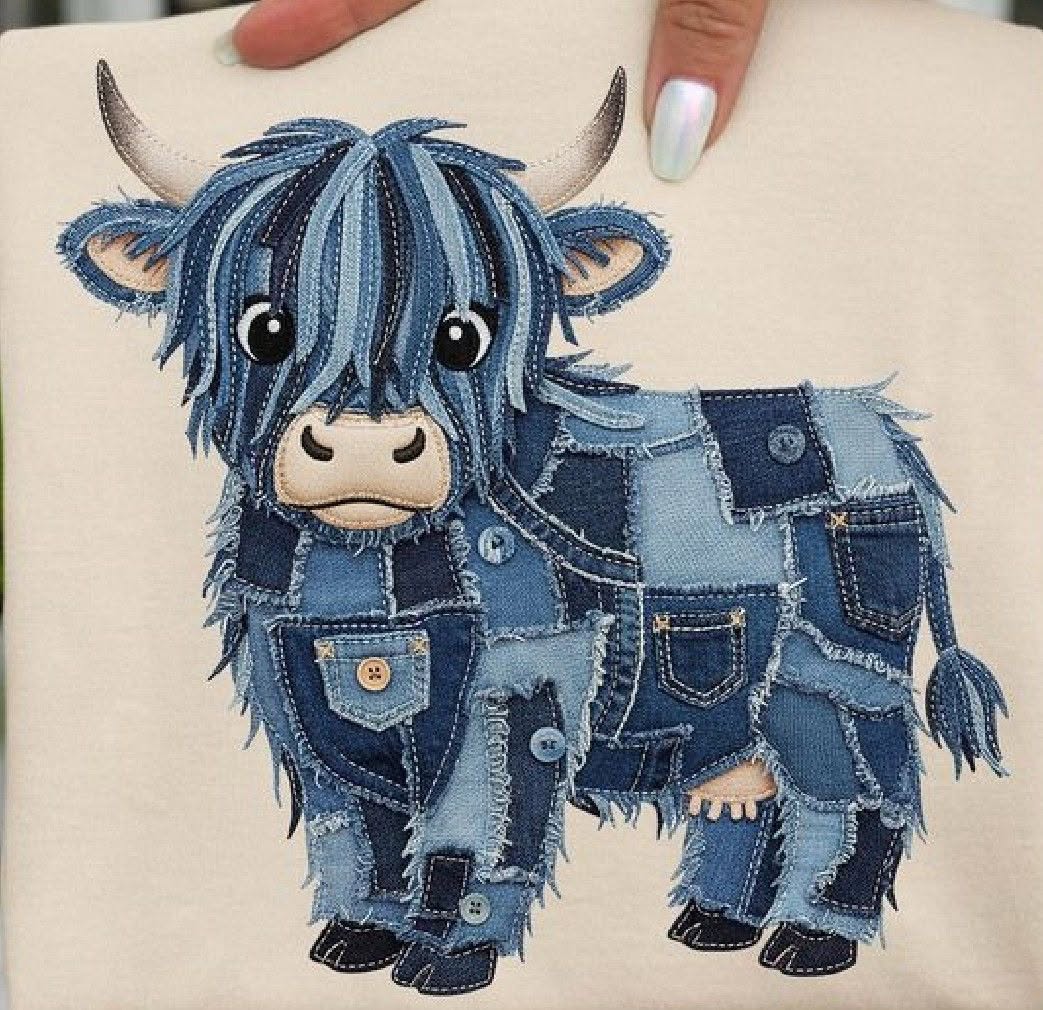
One of the most interesting features of this denim appliqué pattern is the combination of recycled fabric textures. Light blue, medium blue, and dark indigo denim work together to create dimension, while exposed seams and slightly frayed edges give the Highland cow its distinctive personality. Small buttons, miniature jeans pockets, and decorative topstitching make every section unique, transforming ordinary fabric scraps into an extraordinary piece of textile art.
Whether you are an experienced quilter or someone looking for an exciting new sewing project, this design offers countless opportunities for personalization.
The finished Highland cow can be incorporated into decorative pillows, wall hangings, tote bags, quilt blocks, or framed fabric artwork. This original tutorial is inspired by the photograph and provides suggested measurements, cutting instructions, and sewing techniques to help you recreate a similar design at home.
1. Materials and Fabric Preparation for the Patchwork Denim Highland Cow
DISCOVER MORE FREE PATTERNS HERE!
The beauty of this Highland cow quilt pattern begins with selecting fabrics that offer different shades, textures, and levels of wear. Old jeans are particularly useful because their naturally faded areas, original seams, and pockets provide decorative elements that would otherwise need to be created from scratch.
Materials needed:
-
Light blue denim scraps.
-
Medium blue denim scraps.
-
Dark indigo denim scraps.
-
Beige cotton fabric for the muzzle and inner ears.
-
Cream or brown fabric for the horns.
-
Black and white fabric for the eyes.
-
Black or dark navy fabric for the hooves.
-
Cream cotton fabric for the background.
-
Lightweight fusible web.
-
Lightweight cotton batting.
-
Backing fabric.
-
Decorative buttons.
-
White, navy, beige, and black sewing thread.
-
Denim sewing machine needles, size 90/14 or 100/16.
-
Fabric scissors, rotary cutter, and cutting mat.
-
Fabric marking pen.
-
Sewing machine and iron.
For a medium-sized denim quilt block, prepare a background measuring approximately 18 x 18 inches (45.7 x 45.7 cm). The Highland cow itself can measure approximately 15 inches wide and 14 inches tall, leaving sufficient space around the design for quilting, framing, or decorative borders.
Suggested cutting measurements:
| Pattern piece | Approximate size | Quantity |
|---|---|---|
| Background fabric | 18 x 18 inches | 1 |
| Body foundation | 10 x 8 inches | 1 |
| Head foundation | 6 x 6 inches | 1 |
| Ears | 3 x 1½ inches | 2 |
| Horns | 3½ x 1½ inches | 2 |
| Muzzle | 3½ x 2 inches | 1 |
| Legs | 2 x 4½ inches | 4 |
| Hooves | 1¾ x 1 inch | 4 |
| Tail | 1 x 5 inches | 1 |
| Hair strips | ½–¾ x 3–6 inches | 18–24 |
| Miniature pockets | 1½–2½ inches | 3–4 |
| Assorted patchwork pieces | 1½–3 inches | As needed |
These measurements represent suggested bounding sizes rather than exact full-size templates. Draw the curved outlines within these dimensions and arrange the pieces before cutting your final fabrics. For raw-edge appliqué, seam allowances are generally unnecessary.
Wash and dry the recycled denim before beginning. This helps remove dirt, reduces potential shrinkage, and allows you to identify areas that are suitable for sewing. Avoid excessively thick seams when they would create unnecessary bulk beneath overlapping appliqué pieces.
Sort your denim scraps into light, medium, and dark color groups. Alternating these shades will create visual contrast throughout the body and shaggy hair. Reserve interesting original jeans seams, decorative stitching, and small pocket sections for the most prominent areas of the cow.
Prepare your background fabric by pressing it thoroughly and marking the approximate position of the Highland cow. Leave additional space for trimming after quilting. A cream, ivory, or natural linen-colored background will emphasize the beautiful blue shades of the recycled denim patchwork.
2. How to Make the Patchwork Highland Cow Body
Step 1 – Draw the Highland cow silhouette
Begin by drawing the main silhouette on paper. Create a rounded rectangular body, a large head positioned toward the left, four short legs, two curved horns, two outward-facing ears, and a narrow hanging tail. Keep the proportions playful rather than strictly realistic to reproduce the charming appearance of the reference design.
Step 2 – Assemble the denim patchwork foundation
Cut irregular squares and rectangles from your assorted denim fabrics. Arrange them over a lightweight cotton foundation corresponding to the cow’s body shape. Alternate dark and light pieces, allowing some sections to overlap slightly. Secure the pieces with straight stitching approximately ⅛ inch from their raw edges. Once the foundation is covered, trim it into the desired body silhouette.
Step 3 – Create the four patchwork legs
Prepare four elongated denim pieces and round their upper edges slightly. Decorate each leg with smaller fabric scraps, contrasting seams, and narrow denim strips. Position the two background legs first, followed by the body and the two foreground legs. This overlapping arrangement creates depth and gives the patchwork cow appliqué a more natural appearance.
Step 4 – Make the hooves and tail
Cut four rounded hoof shapes from black or very dark navy denim. Stitch a narrow line using white or gray thread around their edges and add a short central stitched line to suggest divided hooves. For the tail, cut a narrow denim strip and attach several pointed fabric strips to its lower end, creating a textured tuft.
Step 5 – Add miniature jeans pockets
Create three or four decorative pockets using small pieces of contrasting denim. Fold the upper edges slightly or use raw-edge stitching for a rustic appearance. Add double rows of decorative topstitching around each pocket. Position the pockets across the cow’s body, including one prominent pocket near the chest, to reproduce the recycled jeans appearance.
Step 6 – Secure the body to the background
Arrange the complete body, legs, hooves, and tail on your prepared background fabric. Use lightweight fusible web where appropriate, following the manufacturer’s instructions. Sew around the edges using straight stitching, a narrow zigzag stitch, or decorative appliqué stitching. Keep selected denim edges slightly exposed to achieve the beautiful textured appearance characteristic of raw-edge denim appliqué.
3. Creating the Adorable Highland Cow Face and Shaggy Denim Hair
Step 1 – Make the curved Highland cow horns
Draw two gently curved horn shapes on paper, making each approximately 3½ inches long. Transfer the shapes onto cream or light brown fabric and cut them out. Add darker brown fabric or decorative thread near the pointed tips to create a shaded appearance. Position the horns behind the head foundation so they curve outward and upward.
Step 2 – Assemble the fabric ears
Cut two outer ear shapes from medium or dark blue denim and two smaller inner ear shapes from beige cotton. Place the beige pieces over the denim foundations and secure them with contrasting stitching. Add a few short decorative stitches to suggest the natural folds inside the ears. Attach both ears behind the head, extending them outward beneath the horns.
Step 3 – Create the muzzle and nostrils
Cut a rounded rectangular muzzle from beige cotton fabric, measuring approximately 3½ x 2 inches. Add a smaller curved beige piece beneath it to represent the lower mouth. Use black fabric or embroidery thread to create two curved nostrils and a gentle mouth line. A layer of thin batting beneath the muzzle can provide additional dimension.
Step 4 – Make the expressive Highland cow eyes
Cut two black oval shapes approximately 1 inch tall. Add small white fabric sections along one side and tiny white circles to represent reflected light. These details create the oversized, expressive eyes that make the design particularly charming. Stitch the fabric pieces securely before arranging them on either side of the face.
Step 5 – Cut and arrange the shaggy denim hair
The distinctive hair is the most important decorative feature of this Highland cow sewing pattern. Cut approximately 18–24 curved, pointed strips from different shades of denim. Make the strips between 3 and 6 inches long, varying their widths. Arrange them from the top center of the head, allowing them to cascade around the eyes and muzzle. Alternate dark and light strips to create dimension and movement.
Step 6 – Stitch and texture the hair
Secure each denim hair strip with one or two rows of contrasting straight stitching, leaving the pointed ends slightly loose for additional texture. Add several shorter strips around the cheeks, forehead, and neck. Carefully tease a few threads from selected raw edges to create a soft, shaggy effect without weakening the secured sections. Make sure the eyes remain clearly visible between the layers of denim hair.
4. Finishing, Quilting, and Decorating Your Denim Highland Cow
Once all the appliqué pieces are securely positioned, enhance the design with decorative stitching. White or cream thread creates a beautiful contrast against dark blue denim, while navy thread provides a more subtle appearance on lighter fabrics. Double rows of stitching can recreate the authentic look of traditional jeans construction.
Add small decorative buttons to selected pockets and patchwork sections. Different button sizes and colors contribute to the handmade appearance of the cow. For projects intended for children, replace detachable buttons with embroidered or securely stitched fabric details.
To create a finished Highland cow quilt block, place your completed appliqué panel over a layer of lightweight cotton batting and backing fabric. Smooth all three layers carefully and secure them with quilting pins or suitable temporary basting. Avoid excessively thick batting because the overlapping denim pieces already provide substantial texture.
Quilt around the outline of the Highland cow to emphasize its silhouette. The surrounding background can be decorated with simple straight lines, gentle curves, or free-motion quilting. Avoid forcing the sewing machine through bulky intersections, and use a longer stitch length of approximately 3–3.5 mm when sewing through thicker denim layers.
Trim and square the completed block to your desired dimensions. If you are making a wall hanging, finish the edges with a coordinating denim or cotton binding. For a decorative pillow, add a fabric border if necessary and attach an envelope-style or zippered backing.
The finished Patchwork Denim Highland Cow is incredibly versatile and can be incorporated into numerous creative sewing projects. Its rustic blue color palette works beautifully with farmhouse interiors, country-style kitchens, craft rooms, and cozy living spaces. Each finished cow will have a unique appearance depending on the recycled denim fabrics you select.
Creative ways to use this pattern:
-
Farmhouse decorative pillows.
-
Highland cow wall hangings.
-
Recycled denim tote bags.
-
Country-inspired quilt blocks.
-
Decorative table runners.
-
Sewing room wall decorations.
-
Framed textile artwork.
-
Handmade Christmas gifts.
-
Denim patchwork blankets.
-
Personalized fabric panels.
Frequently Asked Questions (FAQ)
1. Can beginners make this Patchwork Denim Highland Cow?
Yes. Beginners who understand basic sewing and appliqué techniques can complete this project. Start with larger patchwork pieces and simplify the decorative details before attempting the more intricate hair and pocket designs.
2. Can I use old jeans instead of purchasing new denim?
Absolutely! Recycled jeans are ideal for this project. Their faded colors, original stitching, and distinctive textures help create an authentic patchwork appearance while reducing fabric waste.
3. What is the best sewing machine needle for denim appliqué?
A size 90/14 denim needle is suitable for most medium-weight denim fabrics. A size 100/16 needle may be necessary when sewing thicker overlapping fabric sections.
4. How can I prevent the denim from fraying excessively?
Secure the fabric pieces with stitching close to their raw edges. You can allow a controlled amount of fraying for decorative purposes, but avoid removing threads beyond the stitched boundary.
5. Do I need a special sewing machine for this project?
Most standard household sewing machines can handle lightweight and medium-weight denim. Use an appropriate needle, avoid excessive fabric layers, and sew slowly through thicker sections.
6. Can I make the Highland cow using other fabrics?
Yes. Quilting cotton, corduroy, linen, and flannel are excellent alternatives. You can also combine these materials with denim to create an interesting mixed-fabric design.
7. How can I make the Highland cow larger?
Enlarge all the suggested pattern pieces proportionally. A larger design is particularly suitable for decorative wall hangings, oversized cushions, or the central panel of a farmhouse quilt.
8. Can the finished denim quilt be washed?
Yes, provided that all fabrics and decorative elements are washable and securely attached. Gentle washing with cold water and air drying is recommended to preserve the textured edges and decorative stitching.
9. How can I make the Highland cow look more three-dimensional?
Use overlapping hair strips, lightly padded facial features, layered pockets, and contrasting denim shades. These techniques create natural shadows and give the finished design additional depth.
10. Is this a good project for leftover fabric scraps?
Definitely! This scrap fabric quilt pattern is an excellent opportunity to use small denim pieces that might otherwise be discarded. Even narrow strips and leftover pocket sections can become beautiful decorative features.
Conclusion
The Patchwork Denim Highland Cow Pattern is a wonderful celebration of creativity, recycled fabrics, and traditional sewing techniques. With its adorable facial expression, shaggy denim hair, miniature pockets, curved horns, and beautifully textured patchwork body, this charming design brings personality to any handmade fabric project.
One of the greatest advantages of this pattern is that no two Highland cows need to look exactly alike. Every combination of faded jeans, decorative seams, contrasting thread, and fabric scraps creates a distinctive piece with its own character.
Whether you are creating a beautiful farmhouse pillow, a decorative wall hanging, or a memorable handmade gift, this recycled denim Highland cow quilt project offers an inspiring way to transform ordinary materials into extraordinary textile artwork. Gather your favorite denim scraps, explore different fabric combinations, and enjoy bringing this adorable countryside character to life, one stitch at a time.